
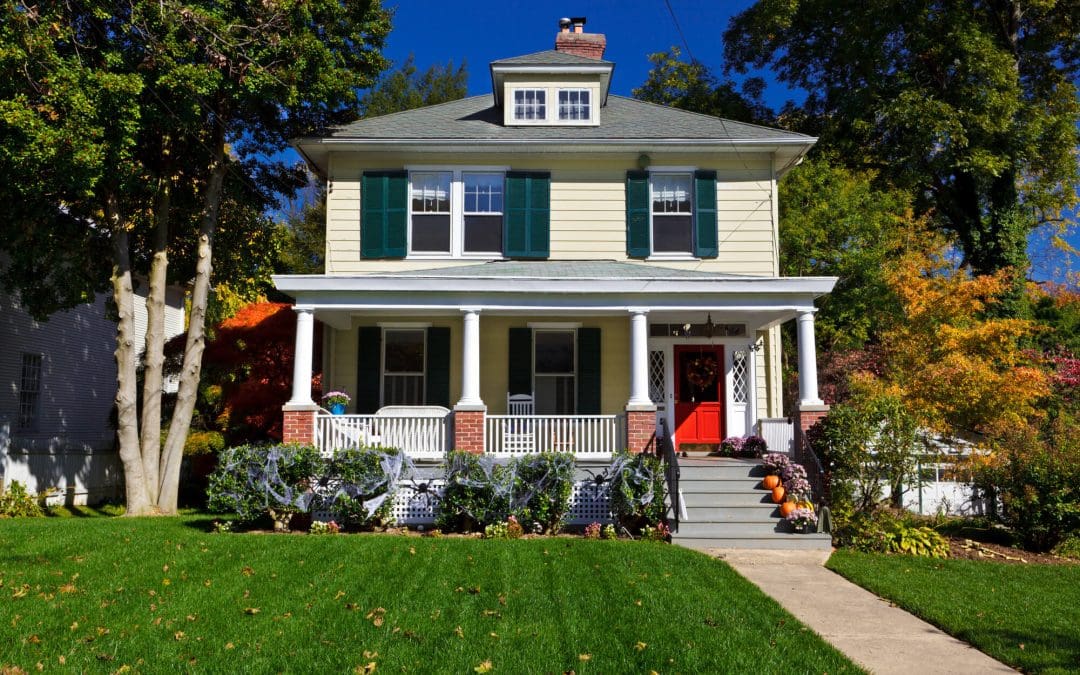
Autumn gives homeowners a built-in palette of color, texture, and warmth that summer doesn’t, and the best fall curb appeal takes advantage of all of it rather than defaulting to the synthetic-looking decorations that make a home look festive rather than well-composed.
Fall Curb Appeal Starts With What the Season Already Provides
The foundation of strong fall curb appeal isn’t what you add; it’s how well you manage what autumn naturally delivers to the property. Leaf management is the non-negotiable baseline. A lawn blanketed in decomposing leaves looks neglected regardless of what’s on the porch. Raking regularly rather than waiting for a single weekend effort keeps the lawn visible and the beds defined. Dead or diseased plant material should be removed from beds before it collapses into the mulch.
Mulch refreshing is an underused fall curb appeal tool that produces a disproportionate visual return. Fresh mulch at two to three inches depth covers the tired, compressed mulch of summer and provides the clean, dark background against which container plantings and seasonal decorations read with the most impact. Gutter cleaning contributes meaningfully. Gutters overflowing with leaves stain fascia and siding, compromising the exterior surfaces that define the home’s appearance from the street. Keeping gutters clear maintains the clean exterior line that curb appeal depends on.
Seasonal Additions That Elevate Fall Curb Appeal
Once the baseline maintenance is established, the additions that elevate fall curb appeal are those that feel collected and considered. Container plantings are the addition with the most visual flexibility. Ornamental kale, trailing sweet potato vine, and compact chrysanthemums in a large container flanking the front door create a color-layered composition that reads as designed. Pumpkins and gourds grouped in varying sizes produce the organic, textural quality that makes fall curb appeal look intentional. Selecting varieties in a consistent color family creates cohesion that a mismatched display doesn’t.
Lighting plays a different role in fall than in summer; the days are shorter, which means exterior lighting is visible for a significantly larger portion of the day. Ensuring all exterior fixtures function and are fitted with warm-toned bulbs produces the inviting glow that fall evenings call for. The front door and entry zone remain the focal point of curb appeal regardless of season. A seasonal wreath of dried botanicals, pinecones, or preserved foliage replaces summer’s dried-out greenery with something intentional. A coordinating doormat, a swept entry, and visible house numbers complete the entry.
The Maintenance That Protects the Investment
The season also calls for the exterior maintenance that keeps the home looking its best through winter and into spring. Lawn care in fall is the investment that pays forward into the following year. Overseeding thin areas, fertilizing before dormancy, and aerating compacted soil improve the lawn’s condition in ways that make next spring’s curb appeal significantly better. Exterior paint and caulking assessment in fall identifies areas that need attention before winter’s freeze-thaw cycles worsen existing failures. A fall inspection of caulking at windows, doors, and trim, with touch-up where needed, extends the life of the exterior finish and prevents the moisture intrusion that turns a fall concern into a spring structural repair.
Frequently Asked Questions (FAQs)
When should I start working on fall curb appeal?
Early to mid-September is the ideal window in most regions. Starting early means the property looks its best through the full autumn season rather than only for a few weeks before winter.
What are the most affordable curb appeal improvements?
Leaf management, mulch refreshing, and gutter cleaning cost very little and produce the largest baseline impact. A container planting arrangement at the front door runs $50 to $100 and significantly elevates the entry. A seasonal wreath and new doormat together run under $75.
How do I create fall curb appeal that doesn’t look overly decorated?
Limiting the color palette to two or three colors across all seasonal additions produces visual consistency. Grouping elements in odd numbers and varying sizes creates organic interest without a regimented look. Anchoring with natural materials keeps the composition feeling fresh rather than festive.
Does fall curb appeal affect home sale outcomes?
Yes, significantly. The exterior photographs are almost always the first images buyers see, and a home that looks thoughtfully maintained in those photographs generates more showing interest than one that looks bare or neglected.
What fall plants work best for container arrangements near the front door?
Ornamental kale and cabbage provide bold color and structural presence and hold up well through cold temperatures. Chrysanthemums are the most widely available fall bloom and coordinate with most exterior palettes. Ornamental peppers, trailing ivy, and sweet potato vine add texture and movement. Combining a tall structural plant with a mid-height blooming plant and a trailing variety produces the layered arrangement that elevates curb appeal.
I Spy Inspectors provides comprehensive home inspections in Wisconsin. Contact us to schedule an appointment.